
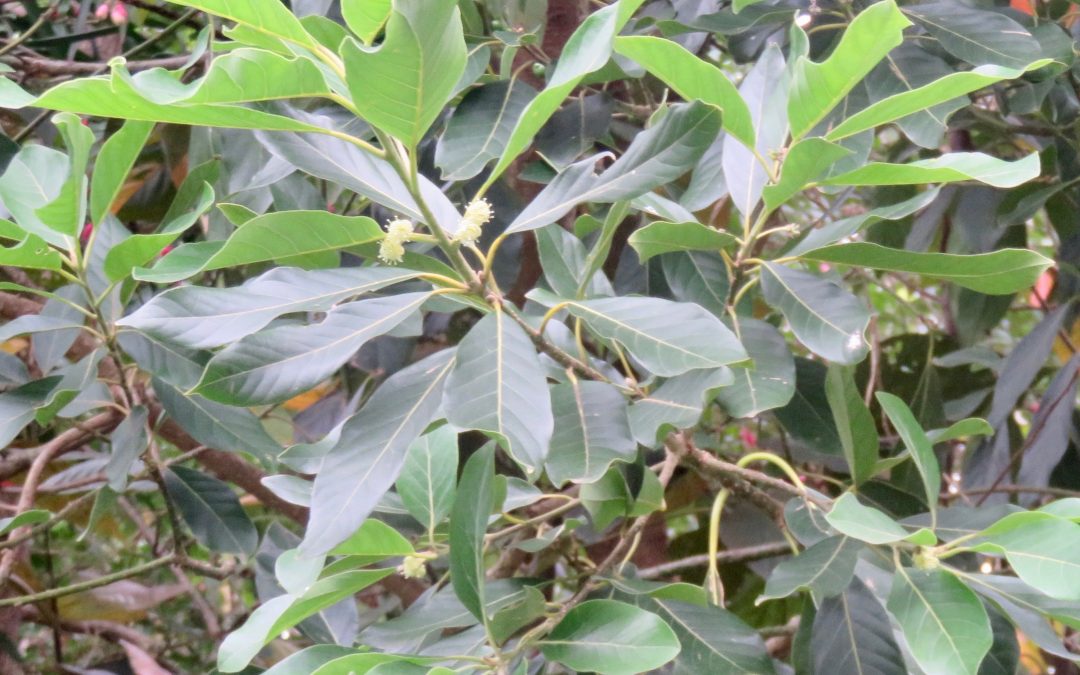
Indian laurel – Litsea glutinosa
Indian laurel is a large, fast growing evergreen tree reaching a height of 6-10m and within about 3 years it can reach a height of 2-3 meters and begin fruiting.
The leaves are dark green and oblong with a slightly wavy margin resembling the leaves of the Avocado tree but the easiest way to distinguish this species is to crush the leaf, as it has a rather unpleasant, distinctive smell.
It has yellow-green flowers from Oct to May followed by pea-sized, round berries that range from purple brown to black in colour. Birds disperse the seeds and “carpets” ofseedlings germinate in the vicinity of a large fruiting tree, which can potentially infest a neighbourhood.
This tree is highly invasive and is a serious habitat transformer. It is one of the biggest threats to our local forests where it can quickly displace indigenous plant species and it readily invades watercourses, road reserves and verges, forests, open spaces and gardens where it also poses a threat to buildings and walls.
To eradicate this tree: Indian laurels are best dealt with when they are small, but they are difficult to pull as they have a very long taproot. Seedlings and trees up to a height of 1 meter can be sprayed with a suitable herbicide. Larger trees can either be cut and a suitable herbicide applied to the freshly cut stump or can be painted around the entire trunk from ground level up to a height of 30cm with a suitable herbicide mix.
Recent Comments